Nearly three years after I first posted about my new Leica Q on this site, it was stolen from a South Kensington Pub. This was after a visit to the Natural History Museum to see the 2019 Wildlife Photographer of the Year Exhibition. I am fairly sure it was a professional thief, rather than an opportunist, who stole it as the camera was right next to me in its bag and our table was never unattended – yet we saw nothing. As the pub had no CCTV the police soon closed the case. Happily the camera was insured, and I was able to replace it.
Always on the Move…
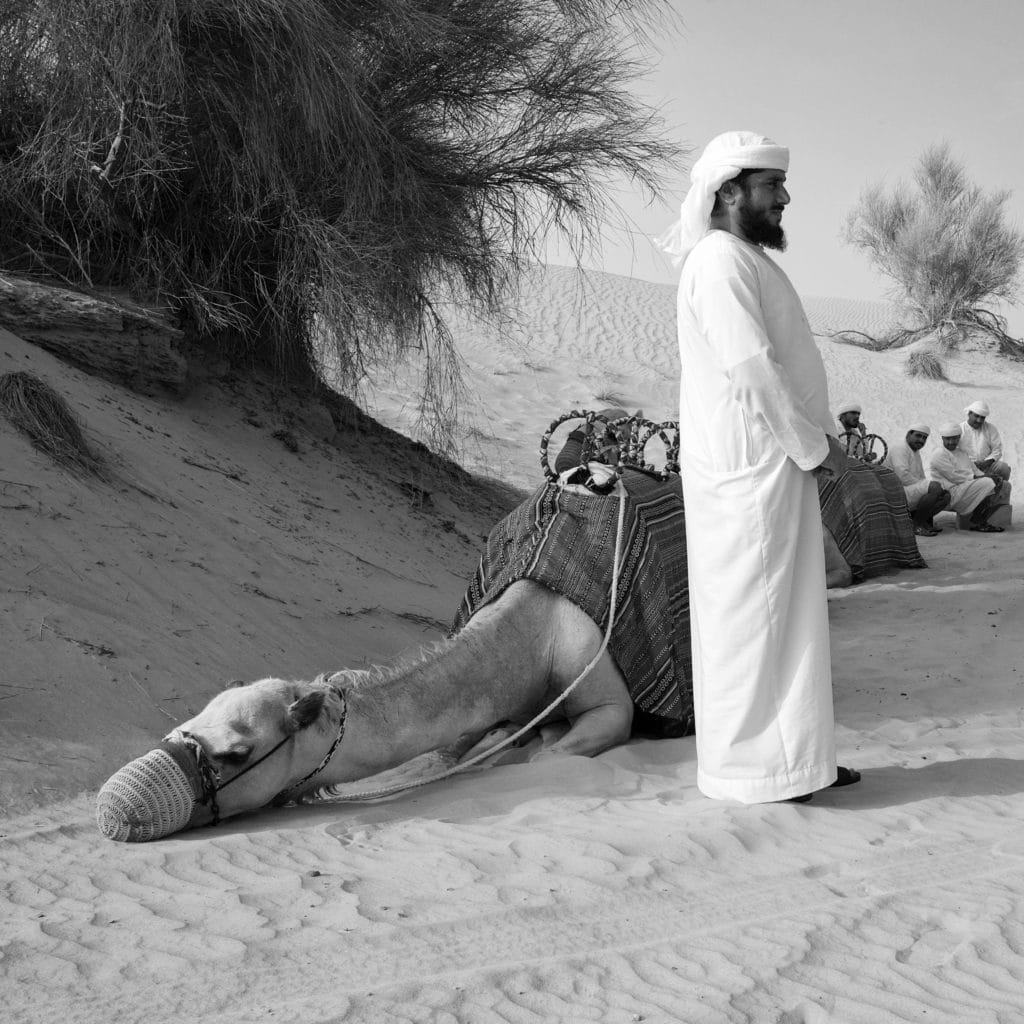
The Empty Quarter, UAE
2016-2018 were big travel years for me as my work took me to the US, Europe, the Middle East, Africa and, for a short while, the Far East. I also went on a couple of road trips – one from Canada to Mexico, and another across Japan. I was rarely at home during those years and I took my Leica Q everywhere I went. I took around 25,000 shots along the way and came to love my camera; it took everything the world could throw at it, whilst remaining perfectly usable, was a joy to handle and allowed me to create some of my best images. In this post I’ll share what I learned along the way.
Lessons Learned
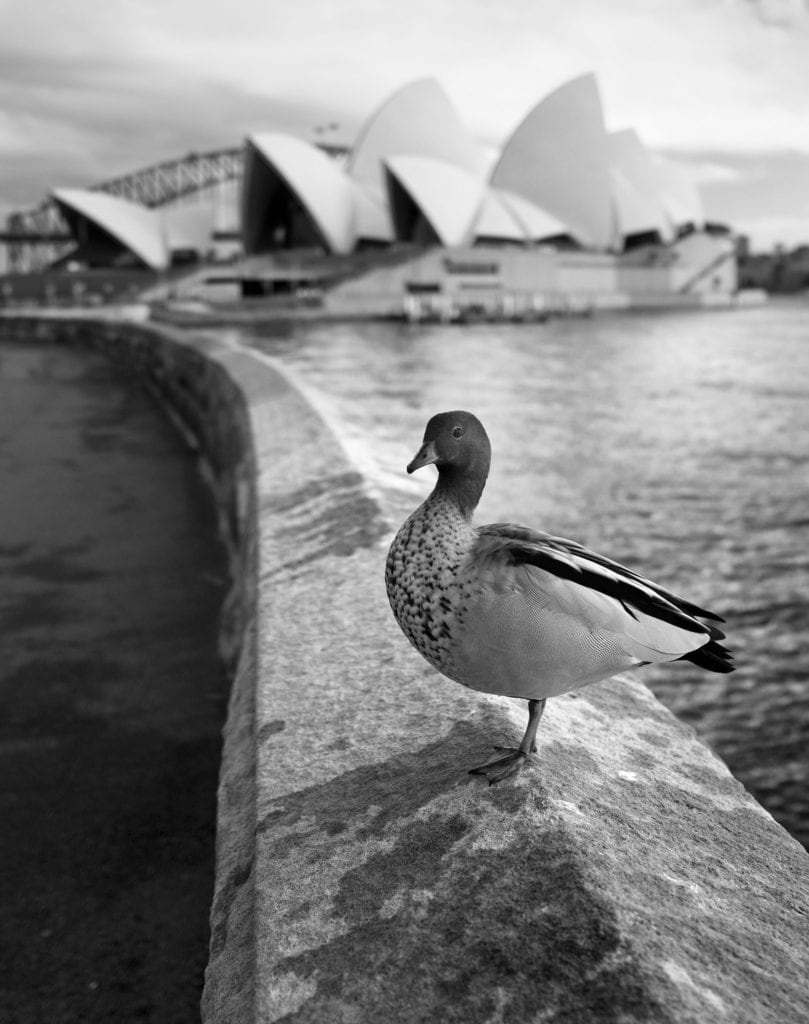
Firstly, the Leica Q is extremely tough and resilient . When I changed straps from the elegant, but thin, leather strap that came with the Q to my preferred, and wider, M strap I didn’t attach it correctly. It later came unfastened – just as I was about to shoot the Sydney Opera House. It hit the ground hard but fortunately had only a small ding on the top plate to show for it. Many other cameras would have been rendered unusable by the impact, if not damaged beyond repair.
This shot was taken just after my Leica Q hit the ground with some force.
The reason the Q survived the impact so well is because the top plate is machined from a solid block of aluminium that sits atop a tank -like body of magnesium alloy. For travellers there is just no substitute for a resilient camera – knocks are inevitable over time.
It’s worth mentioning that there is a knack to putting the strap on correctly to avoid testing the Q’s build quality the way I did. The easiest way is to take the metal fastener off the strap, put it on the camera first and then attach the strap. It’s actually pretty hard to get it wrong if you do it that way.
For a camera that lacks weather proofing it does very well in harsh conditions. Eventually the sensor needed cleaning, but that was after two years of shooting in some hostile climates including a couple of visits to one of the most inhospitable – the Rub al Khali desert, otherwise known as the Empty Quarter.
The Summilux f1.7 stabilised lens is unparalleled for sharpness. It’s the best lens I have ever owned, works incredibly well with the full frame sensor and of course delivers the recognisable but difficult to define Leica look. It is an aspherical (ASPH) lens, a design that tends to be more compact, sharper in the corners wide open and offers a bit more contrast.
I also found Leica’s choice of 28mm for a fixed lens to be a good one. 28mm is wide enough for landscape and urban work and you can easily crop in a little for street photography.
Shooting with the Leica Q is enjoyable and intuitive. The Q combines minimalist manual controls with modern electronic assistance to create a first class user experience.
After service is incredible. When I had the sensor cleaned (which was free of charge) Leica service replaced the chequered outer covering of the camera as part of the service!
It is worth considering both the hand grip and the Match Technical Thumbs Up for improved ergonomics. I prefer the Thumbs Up both in terms of handling and because the hand grip needs to be removed to change the battery or a memory card. It comes off quickly, but it will still slow you down a little. I use the Thumbs Up EP-SQ2 which is machined from solid brass and locks onto the hot-shoe with a hex key. It is pricey, but worth it as it is beautifully made. Once the Thumbs Up is on the camera it really does feel like it was always there and part of the original product.
When I got my replacement camera I was reminded of just how excellent the packaging is. The ‘chest of drawers’ that contains the camera, its accessories (all in their own little Leica bags) and documentation is really well designed. Just search YouTube for Leica Q unboxing to see how many people have been enthralled by the experience.
Despite its relatively small size it is a camera that attracts attention – good and bad. I keep the famous red dot logo covered, but Leica cognoscenti still comment favourably on my choice of camera from time to time. This is particularly the case in Deal, Kent where my parents live, and where I often visit. It seems there is a high concentration of Leica users there…
When a friend of mine purchased a Sony RX1 in 2016 I thought it was way to much to spend on a compact camera. At £2,700 this was no trivial purchase and so I looked closely at cheaper options: the Fujifilm X100T and Olympus OMD 5 Mk II. Both of these cameras have retro looks and plenty of external controls, which personally I prefer and were far less expensive than the Sony. The Leica Q was not on my list.
Temptation
Then I read started to read reviews of the Leica Q. Pocket-Lint described it as “the best fixed-lens full-frame compact ever made” but it was Craig Mod‘s blog that really got me thinking. It was a six month field test in Asia and was one of the positive and compelling reviews I have ever read of a camera.
“Make no mistake: The Q is a surgical, professional machine. It pairs best-of-class modern technology (superb autofocus, an astounding electronic view finder, workable isos up to and beyond 10,000, a fast processor, beefy sensor) with a minimalist interface packed into a small body, all swaddled in the iconic industrial design for which Leica has become famous. The result is one of the least obtrusive, most single-minded image-capturing devices I’ve laid hands on.”
“If the gf1 so many years ago set in motion an entirely new genre of camera with micro four-thirds, the Q epitomizes it. If the iPhone is the perfect every person’s mirrorless, then the Q is some specialist miracle. It should not exist. It is one of those unicorn-like consumer products that so nails nearly every aspect of its being — from industrial to software design, from interface to output — that you can’t help but wonder how it clawed its way from the r&d lab. Out of the meetings. Away from the committees. How did it manage to maintain such clarity in its point of view?”
I believe that in hindsight… the Leica Q will be seen as one of the greatest fixed-prime-lens travel photography kits of all time.”
After reading that review I realised I wanted a Leica Q quite badly – but at close to £3,000 could I justify the purchase?
A demanding specification
Thinking through what I really wanted out of a large sensor compact I came up with a fairly demanding specification:
Large sensor (full frame if possible, but no smaller than APS-C)
Silent shutter operation
Usable at high ISO
A sharp, fast lens preferably with image stabilisation
Fast autofocus
Effective viewfinder
Good handling/ergonomics
Durable magnesium alloy construction
Weather proof
Good battery life
Decent burst performance
Value for money
The Leica Q has all this nailed except for weather sealing. That said, Craig Mod’s review indicated it was pretty tough:
“Over these last six months, the Q joined me while on assignment in South Korea, trekking across Myanmar, hiking the mountains of Shikoku, and spending a few freezing nights on Mt. Kōya. It was used in searing heat, 100% humidity, covered in sweat amid rice fields beneath a relentless sun…. The Q is small but substantial. Solid. It becomes an effortless all-day companion. Strapped across my chest, it was banged sideways against rocks, motorcycles, stone walls, metal water bottles, farmers, cats. It captured everything thrown at it and into it.”
Purchasing The Leica Q
I attended the Photography Show and after testing some of Nikon’s newest gear, went to the Leica stand to see if I could get my hands on one. There was one to hand and it didn’t take me long to decide that I really wanted one. The lens was astonishingly sharp, the build quality was rock solid and the camera was a joy to handle. The good people at Leica told me that the London Camera Company had six Qs on their stand to sell at the show, so I went and promptly bought one – the alternative being a lengthy waiting list. I wondered whether I would suffer buyer’s remorse afterwards – at £2,900 the Q is by far the most expensive camera purchase I had ever made.
Q Results
My experience with the Q, and its successor the Q2, has really been an extension of my first touch of the camera – it is a delight to use. It took me quite a while to get over how sharp the f1.7 lens is – I believe it is the sharpest lens I own. What I also found is that the camera can be remote controlled from my iPhone, which has permitted some street shots that I would not have got otherwise and that I could compose in high contrast black and white whilst simultaneously shooting in raw.
The shot of the boats in Folkestone harbour is straight from the camera. The image at top is of some objects for sale in Deal Market as was shot at f1.7 focusing on the statuette at the back of the table and shows the almost 3D effect a fast, very sharp lens can produce. Here is my summary of how the Q met my requirements:
Value for money – Leica’s 28mm f/1.4 retails at £3,900 with the f/2 costing £2,700. £2,900 for a full frame camera plus an f1.7 lens suddenly seems quite reasonable
Fast burst performance – 10 fps burst
Good battery life – 300 shots (Leica/CIPA tests) which is decent
Weather proof – sadly the Leica Q is not weather sealed
Durable magnesium alloy construction – a milled aluminium top and base plates and a magnesium alloy body provide an unrivalled quality feel
Good handling/ergonomics – The camera is built in Germany, the home of the Leica M. There is a good thumb grip on the back, and the optional grip is excellent. The controls are well laid out with an excellent tactile feel to them.
Effective viewfinder – The Q’s viewfinder is electronic rather than optical, but it does a pretty good job of mimicking an the optical EVF with its high resolution EVF, which at (3.68 megapixel resolution is the highest currently available.
Fast autofocus – The Leica Q is the first full-frame Leica to incorporate an autofocus system. It has a 49-point system with multi, 1-point, tracking, face-detection and touch AF.
A sharp, fast lens preferably with image stabilisation – f1.7, 5 axis stabilisation
Usable at high ISO – up to 6,400 in my estimation with film like grain
Silent shutter operation – leaf shutter for close to silent operation (1/2000s)
Large sensor – 24 megapixel full frame sensor with no optical low-pass filter for improved detail and tone mapping
And here are some of the extra’s I didn’t expect.
Remote control from iPhone via the Leica Q App
Rapid transfer of images of to iPhone via the Leica Q App
Ability to shoot wide open in bright conditions due to the electronic shutter (1/16000s)
Excellent monochrome setting, which allows high contrast mono JPEGS to be captured along with full colour RAW images
The Outstanding macro mode with 17cm minimum focus distance, activated from the control ring on the lens. The distance markings on the lens change to a new set of macro markings in a way that really exemplifies engineering excellence.
The aperture is controlled by a ring situated at the front of the lens (as with any M lens) and is astonishingly pleasing to handle and use
Excellent bokeh, especially for a relatively wide angle lens
The lens hood is incredibly solid and attractive – it is similar to the M’s Summarit 35mm
For a compact camera the Leica Q is quite substantial – it is not, by any means a pocket camera at 130 x 80 x 93mm and 640g. The purchase price is the same, but more so – it is very substantial! However, it is the best camera I have ever owned, and for me, an important step forward in camera development. I am shooting more and shooting differently – in street photography the 28mm makes you get in close (like Robert Capa and William Klein) and that means I am shooting better with the Leica Q and that is worth a lot to me.
Postscript – The Q2 and Back to Film
My Q was stolen in London – somehow thieves hooked the camera bag out from under the table where I had put it in a London pub. I I was sad about it as it had been all over the world with me – as described in Around the World With a Leica Q. The upside is the Q2 had just become available and I upgraded, giving me both weather proofing and the ability to crop in a little more, because of the larger sensor.
During lockdown I got back into film photography. I wasn’t sure about rangefinders so I started out with a low cost option – a Yashica GSN, which is a great way to get started. Finding that I got on with the Yashica well, I saved for a M6 TTL which I have enjoyed shooting with ever since. I have not switched from Nikon for a removable lens system as the cost of the many lenses I use is prohibitive, so the Q2 is the only digital Leica I own, but for street, travel and general purpose photography it remains my go to camera. so is the Leica worth it? With the built in Summilux the Q2 offers, I say it is.
Before I went back to film with a Nikon F3 in 2016, my previous film camera was a compact APS film point and shoot Canon IXUS, from the late ’90s . My photos from that time date from before I actively studied photography and the shots aren’t the best. So my journey with film photography really started with the Nikon F3.
A Fortunate Find
Whilst staying with friends in Stockholm in 2016, I came across an Aladdin’s cave of a camera shop, which had a number of film cameras for sale, including Kodak Instamatics, Rolleiflex TLRs and Nikon SLRs, including several Nikon F3 models, some fitted with external motor drives.
The Nikon F3 model I picked out showed signs of wear and had a hole in the bottom of the body (which I later discovered was due to a missing motor drive coupling cover) but I was quite taken with it and bought it on impulse.
An Early Model
This was my first Nikon film SLR. A bit of research revealed that the F3, the successor to the legendary Nikon F (also reviewed on this site) and F2, was the last of the manual-focus, pro 35mm SLR cameras. It was introduced in 1980 and stayed in production until 2001, despite being superseded by the autofocus F4 in 1988.
That’s a long run – especially as according to Nikon’s own history, work on the F3 started back in 1973, barely two years after the debut of the Nikon F2! The formal design process started in 1977 and a prototype was ready by late 1978, which is when NASA came knocking for an automatic exposure control camera for the Space Shuttle.
A check on the serial number showed my F3 was an early model from 1981, not the more common HP (High Eyepoint) variant introduced in 1982. The HP model is identical to its predecessor except for the finder (DE-3), which allowed those wearing glasses a better view of the entire frame. This became standard on the F3, which became known as the F3HP.
Finder Trade-offs
I don’t wear glasses when shooting, preferring to use a diopter, and in this case that’s an advantage, as the trade off the HP model makes to make the whole viewfinder visible from slightly further back is fractionally lower magnification. The F3 is also slightly lighter than the HP variant as the HP finder weighs a little more, though the HP finder has slightly improved rubber sealing. Unless you wear glasses, there isn’t much in it.
Five Finders
The F3 has five finders (all interchangeable) to choose from: eye-level (DE-2), eye-level HP (DE-3), waist-level (DW-3), sport (DA-2), and high-magnification (DW-4). The F3 also offered a right-angle viewing attachment (DR-3) and an Eyepiece Magnifier (DG-2). I’ve stuck with the DE-2 my F3 came with.
F3 Exotics
Beyond models based on finder variants there are several more exotic models of the F3. The best known, is the F3/T titanium model, which is not much lighter than the regular F3 but quite desirable.
There was also a ruggedised F3P Press/Professional model, the F3 AF autofocus model and the weighty F3H F3 High Speed, a motorised speed demon that could shoot at 13 frames per second.
The autofocus Nikon F3 AF, which became available in 1983 with 2 autofocus lenses, was Nikon’s first entry in the world of AF technology. The Nikon F-501 arrived in 1986, and the Nikon F4 in 1988.
The F3 Electronics Controversy
Unlike its predecessors, which had always been entirely mechanical, the F3 uses an electronically controlled shutter which requires batteries. Electronic shutters and dependence on battery power for anything more than a light meter was initially resisted amongst Nikon professional shooters. Their initial response was to remain loyal to their fully mechanical F2s and eschew the F3.
This controversy apparently continued for years and may still continue. As one blogger wryly commented as recently as 2019: “I mean, what could possibly go wrong in attempting a dispassionate, objective analysis of two excellent SLRs made by Nikon? Oh…right…we are dealing with two groups of people: 1) those that believe that the SLR reached perfection in 1971 and everything since is an abomination against the laws of nature, aka “Knights of the Order of F2″ (referred to henceforth as KOTOOF2), and 2) everyone else.”
The fears of Nikon pros at launch turned out to be unfounded as the F3 demonstrated itself to be just as bulletproof as the F and F2. Nikon was committed to increasing reliability – as an example the F3’s shutter was designed to last an incredible 150K actuations, increased from 100K for the F and F2. However, to give photographers more confidence in the new technology Nikon built in a backup mechanical shutter into the F3 that operates at 1/60 sec.
In practice, the F3’s batteries last a very long time (compared to my Leica M6 TTL for example) and the tiny LR44s are easy to carry as spares. I also have an F2 with a Photomic head, and it is excellent, but my F3 gets used more.
The F3’s Horizontal Shutter
Another issue that the professionals weren’t keen on was the slow flash sync speed. The F3 has a horizontal travel shutter which, given the 3:2 aspect ratio of film, takes longer to operate than a vertical travel shutter. The 1/80 second maximum sync speed was the same as that of the F2, but well below the semi pro models (FA, FM2, FE2) with vertical travel shutters, which offered 1/250 second. The F3 was the last of the Nikon Pro cameras with a horizontal shutter – the F4’s went the other way.
Longevity versus Mechanical Cameras
Over time electronic components can be the Achilles heel of older film cameras and initially I thought the Nikon F3’s LCD which displays the shutter speed might be a weak spot. The display in the viewfinder, the Aperture Direct Readout (ADR), is just a display window so is not subject to deterioration, but LCDs don’t always age well. They can become harder to read over time and eventually stop working entirely. Nikon predicted they would only last about seven years or so with pro usage! 35 years after leaving the factory my well used F3’s LCD is holding up perfectly well. The F3’s manual controls also mean that the camera can still be used without the LCD display, although not with automation.
The last point to consider in the electronic vs mechanical Nikon stakes are that electronic shutters usually maintain their accuracy over time better than mechanical shutters.
F3 Surprises
One surprise to me about the F3 was that it was styled by an Italian design legend: Giorgetto Giugiaro, the man who styled the Ferrari 250 GT Bertone, the Aston Martin DB4 GT Bertone, and much else.
Another surprise was that there were Space Shuttle versions of the F3. These had large magazine backs of different capacities and various other modifications for use in space. It wasn’t the first Nikon in space however, as modified Fs were used aboard Apollo 15 and Skylab.
Upgrades and Repairs
Before I could shoot with my new purchase I needed to get it serviced and replace the missing motor drive coupling cover. Reading a little more, I learned that my camera was fitted with an unusual focusing screen, a plain matte screen which lacked the usual split image rangefinder spot.
The F3 is highly modular. Its five interchangeable viewfinders could be paired with some twenty interchangeable focusing screens. These vary from the standard central split-image microprism rangefinder screen to those for very specific use cases such as close ups, astro and architectural photography.
Mine was fitted with a Type D, which is used for close ups and with long lenses. I called Greys of Westminster and ordered the more usual Type K type rangefinder screen, a new coupling cover and a -2 diopter. The most common screen types (and my type D) are shown in the table below.
Screen Type
Description
Best For
K (Standard)
Matte/Fresnel with 3 mm split-image and 1 mm microprism collar
General photography; typical standard screen
B
Matte/Fresnel with fine-ground matte spot in the center
Telephoto lenses and precision manual focus
D
Fine-ground matte with no focusing aids
Clear, uncluttered view; macro and low-light
E
Like K but with etched grid lines
Architectural work, alignment, composition
P
Diagonal split-image, microprism collar, and grid lines
Versatile; focus aids plus composition guides
It’s easy enough to remove the F3’s finder to change the screen. Sliding the grooved buttons on each side of the finder back towards the eye piece releases the front of the finder which can then be lifted out and removed.
All that remained was to take the body into my local camera shop, imagex, who sent it away for a much needed service, at a very reasonable cost of £69.
Adjusting to the F3
It wasn’t difficult to get used to the controls of the F3. They are simple and the dials on the top plate of were familiar looking, as I was shooting with the retro styled digital Nikon Df at the time, and the F3 only offers aperture-priority automation and manual operation.
I did fire the shutter accidentally with the backup mechanical release lever (‘what does this lever do? doh!’) to the right of the lens beneath the ‘exposure memory lock’ button (AE-L on modern cameras).
LCD Display
The LCD shutter speed window in the finder isn’t especially bright and can be hard to read at times. There is a button to light it up but it’s exceptionally hard to press and gives so little additional light that it’s not worth the effort. I actually prefer the needle matching system of the FM3A, FE and FE2, though that is even harder to read in low light.
80/20 Centre Weighting
An adjustment I thought I might need to make was to get used to the heavily centre-weighted metering system, apparently a request from Nikon Pros looking for greater precision. Metering is TTL and reads the light over the whole focusing screen, but nearly all (80%) of metering sensitivity is set to the central 12mm, whilst the rest of the screen gets the remaining 20%.
Nikon accomplished this weighting in an unusual way; by putting thousands of tiny little pinholes in the reflex mirror. These allow exactly 8% of the light to pass through the mirror and onto a metering cell. This didn’t make its way into subsequent models; the F4 reverted to 60/40 weighting.
In practice the heavy centre weighting can be useful, and certainly hasn’t presented a problem, even when I forgot about it, but that maybe because I shoot with very forgiving black and white negative film.
The F3 was the first in the F series to put the meter in the camera body. Previous models, which had the meter in the prism, featured 60/40 centre-weighted metering. This is also the case with the last of Nikon’s film cameras, the rather wonderful FM3A.
One little control that isn’t at all obvious is the Multiple Exposure Lever on the far right of the top plate. This enables you re-cock the shutter without advancing the film.
First Outing with the Nikon F3
Once the camera was back from service I bought some Ilford HP5 400 film and headed for the Victoria and Albert Museum, where I shot some of the statues in various galleries, whilst I also visited the excellent Paul Strand photographic exhibition. Initially I kept looking at the back of the camera to see what I had shot, only to be greeted by cardboard film type insert on the camera back. My first keeper is shown above – I really liked the grain and the tone of film and I was hooked.
From the Nikon F3 Onwards…and Backwards
Since I bought the F3 I have acquired several other Nikon film cameras, including the mighty F6 the hybrid mechanical/electronic marvel that is the FM3A, and the FE2 – all of which you can read about in detail on this site from the preceding links.
I’ve also gone back to the start of the F series with a late F from 1970 and an F2 from 1975, both of which are excellent cameras. I particularly like the way you can see rangefinder DNA in the F’s baseplate, which evolved from the Nikon SP rangefinder. The prototype for the F was built on an SP model, adding the distinctive mirror box and pentaprism of the SLR, and a new lens mount, the F mount. The letter F comes from re-F-lex.
A scene from the Faroe Islands, shot with the Nikon F3
Though some of my photographer friends love the later Nikon F4 and F5, I have never taken to either of them – preferring either the earlier F, F2 or F3 manual focus cameras or the final F6 model.
I’ve taken the Nikon F3 with me when I’ve travelled, including some fairly harsh environments like the Faroe Islands, and it performed very well. I thought about taking my FM2n on that trip, as it is lighter, but the more rugged F3 inspired more confidence.
The Nikon F3’s Professional Successors
For those considering an F3, or perhaps one of its successors, below is a quick comparison table. For me, it is the F3 for manual exposure and the F6 for auto exposure, but that’s just my personal opinion.
Feature
Nikon F3
Nikon F4
Nikon F5
Nikon F6
Metering System
Center-weighted (80%)
Matrix (5-segment), Center-weighted, Spot (3.5mm)
3D Color Matrix, Center-weighted (customizable), Spot (4mm)
3D Color Matrix II, Center-weighted (customizable), Spot (4mm)
Light Meter Sensor
TTL via mirror/focusing screen
TTL via multi-segment SPD sensor in prism
1005-pixel RGB sensor (linked to AF and lens CPU data)
Enhanced 1005-pixel RGB sensor with i-TTL (intelligent TTL) flash and AF integration
Reflective Surface
Mirror and focusing screen
Focusing screen and multi-sensor prism system
Mirror, prism, and RGB sensor combination
Mirror, prism, and refined RGB sensor with advanced integration
First professional Nikon SLR with integrated autofocus (AM200 sensor module)
Advanced Multi-CAM1300 AF with subject tracking
Multi-CAM2000 AF with refined subject tracking and dynamic AF area
Viewfinder Display
LCD metering display
LCD display with comprehensive exposure info
Advanced LCD viewfinder info with customizable grid
Bright, high-contrast LCD with customizable data display
The Go Anywhere F3
The Nikon F3 remains one of my favourite manual Nikon film cameras. Unlike other more expensive classics, such as Leica M6 or Nikon FM3A, which most photographers (including me) fret about in use, my F3 presents no worries at all. It is extremely rugged, affordable to service (or replace), and easy to use.
I bought it slightly beaten up and it’s so tough I am comfortable taking it anywhere. I have 50mm and 28mm (Voigtländer) pancake lenses to keep the form factor to a minimum – the F3 and both pancake lenses easily fit into a small camera bag. It is versatile: the shutter is fast (up to 1/2000 second), and though I haven’t needed them to date, there is a PC connection (though a flash requires an adaptor), and it will take a standard cable release. It takes great pictures. What more could you ask for?
Flash of Darkness
Manage Consent
This site counts visits with Google Analytics, which needs one cookie. Nothing here identifies you, and nothing is passed on. Say no and the site will still work fine.
Functional
Always active
The technical storage or access is strictly necessary for the legitimate purpose of enabling the use of a specific service explicitly requested by the subscriber or user, or for the sole purpose of carrying out the transmission of a communication over an electronic communications network.
Preferences
The technical storage or access is necessary for the legitimate purpose of storing preferences that are not requested by the subscriber or user.
Statistics
The technical storage or access that is used exclusively for statistical purposes.The technical storage or access that is used exclusively for anonymous statistical purposes. Without a subpoena, voluntary compliance on the part of your Internet Service Provider, or additional records from a third party, information stored or retrieved for this purpose alone cannot usually be used to identify you.
Marketing
The technical storage or access is required to create user profiles to send advertising, or to track the user on a website or across several websites for similar marketing purposes.
 Inspiration
 Q Results
 It’s been a while…