Royal Army Ordnance Corps.
Introduction – The Ordnance Family
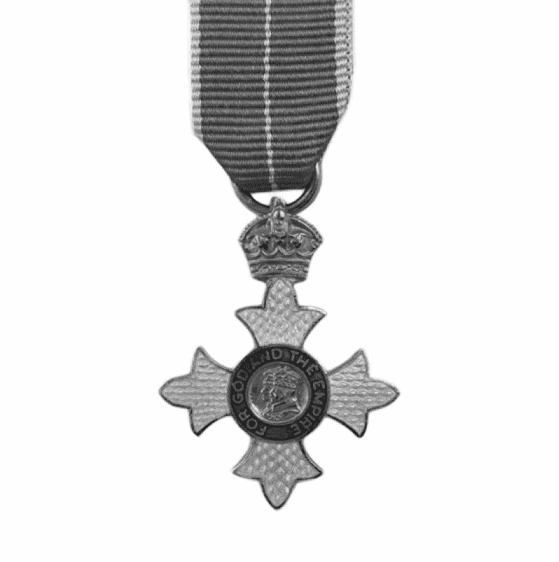
My great-grandfather George Newrick (1894-1968) worked as an engineer at Woolwich Arsenal and moved to Blackburn to help establish the new Royal Ordnance Factory (ROF) Blackburn in the late 1930s. He was awarded the MBE for his work there in 1958. His son, my grandfather, George William Newrick (1915-2004), also worked at Woolwich Arsenal.
Four generations earlier, the Newricks were living in the North East of England, and my 3rd great-aunt Elizabeth Newrick (1835-1926) married Thomas Dixon Brown (1831-1902), a Foreman Fitter from Bishopwearmouth. Thomas moved south to work at the ‘Royal Gun Factory’ (Woolwich Arsenal) and raised two sons who both became Chief Inspectors of Ordnance Machinery for the British Army during WWI. Frank Brown was appointed in December 1914, and his brother Oscar in December 1915. Those sons in turn raised two Brigadiers, Duncan in the RAOC and Cecil in the Royal Marine Artillery.
By a curious coincidence, Brigadier Duncan Brown died in Victoria Hospital, Deal, Kent, where my mother, Yvonne Patricia Newrick, had her last spell in hospital before her death in 2024. He was buried at the Churchyard of the Blessed Mary, Walmer, near Deal, known locally as ‘Old St. Mary’s ’, which is located just a few hundred yards from where I lived in as a boy in the 1960s and early 1970s. This is Brigadier Brown’s story.
Early Life
Duncan Brown was born on 27 August 1896 in Karachi, Sindh, India (now Pakistan). He was the eldest son of Oscar Brown of the Army Ordnance Department and his wife Alice Mary Ann Stephenson.
Duncan’s grandfather, Thomas Dixon Brown (1831–1902), was an engineer originally from Bishopwearmouth, Durham, who worked as a Foreman Fitter in the Royal Gun Factory at the Royal Arsenal, Woolwich, the heart of British weapons manufacture. Thomas married Elizabeth Newrick (1835–1926), whose own family became closely associated with the manufacture of ordnance. Elizabeth’s grandnephew, Charles Owen Newrick (1855–1911), was a munitions fitter at the Royal Arsenal, and Charles’s son George Newrick (1894–1968) would later be awarded the MBE for his work helping to establish the Royal Ordnance Factory at Blackburn during the Second World War.
Thomas and Elizabeth’s two sons both entered the Army Ordnance Department as officers, each with six years’ prior regimental service. The elder, Frank Brown (1862–1944), a Member of the Institution of Mechanical Engineers, rose to Lieutenant-Colonel and received the OBE. He progressed through the ranks of Inspector of Ordnance Machinery and was appointed Chief Inspector of Ordnance Machinery on 8 December 1914, barely four months after the outbreak of war.
Duncan Brown’s Father
The younger brother, Oscar Brown (8 November 1864–1932), Duncan’s father, followed a parallel path: Inspector of Ordnance Machinery 2nd Class from 1897, 1st Class from 1906, and temporary Chief Inspector from 31 December 1915 before being confirmed in the post on 20 February 1917. He was awarded the Distinguished Service Order that same year. As Chief Inspectors, the two brothers were jointly responsible for ensuring that the Army’s heavy weapons and the machinery used to manufacture them were properly designed, inspected, and fit for service — a remarkable concentration of expertise within a single family.
Oscar’s career took his growing family across the breadth of the British Empire. Duncan’s younger brothers were born in a succession of imperial postings: Stuart in Colombo, Ceylon, in 1901; Ivor Granville in Queenstown, Cork, around 1906; and Mervyn in Hong Kong around 1910. By 1911, Alice had borne seven children, of whom six survived — suggesting at least one sibling died in infancy, a common sorrow among families following the flag to tropical stations.
By 1911, with Oscar now a Major stationed near Dover, the family was settled at Roslyn, Salisbury Road, in the town. Duncan, then fourteen, was a pupil at Dover College, the school perched above the harbour whose buildings had once formed the Priory of St Martin. From Dover College, he proceeded to the Royal Military Academy at Woolwich. This was the same Arsenal complex where his grandfather had worked as a fitter in the Gun Factory. He joined in 1914 as war engulfed Europe.
The First World War
Duncan was commissioned as a Second Lieutenant in the Royal Garrison Artillery, Special Reserve of Officers, on 27 August 1915, his nineteenth birthday. He was posted to the 91st Anti-Aircraft Battery, Royal Field Artillery, and in September 1915 crossed to France with the British Expeditionary Force. He served on the Western Front in France and Belgium until 16 October 1916, when he returned to England.
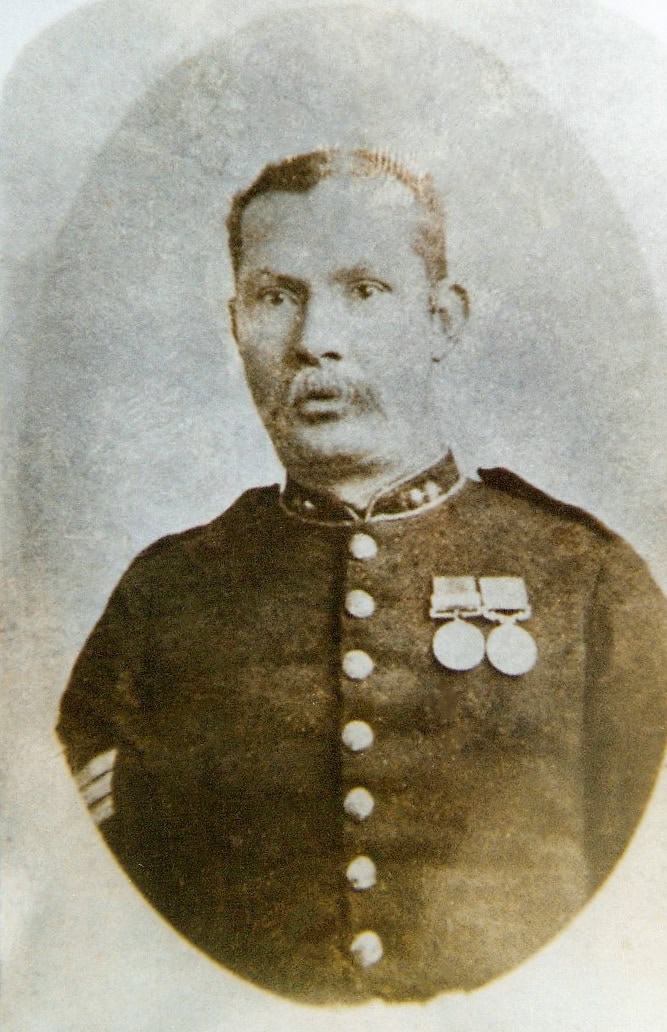
His second deployment came in October 1917, this time as an Acting Captain attached to a Territorial Force Royal Artillery unit. He served continuously until the Armistice in November 1918, and was promoted to Acting Major on 25 October 1918, just weeks before the guns fell silent. During this second tour, he was wounded twice — both wounds occurring in the intense fighting of 1918, the year of the German Spring Offensive and the Allied Hundred Days. His Army List entry carried the double wound marker (××), official confirmation of his injuries.
For his services, he was Mentioned in Despatches, gazetted on 7 July 1919, and was awarded the Military Cross — one of eighty-nine Old Dovorians to receive that decoration during the Great War.
Duncan Brown was not the only member of his generation to serve. His younger brother Stuart (1901–1971) joined the Royal Navy, qualifying as a Torpedo Officer and serving aboard HMS Enterprise among other ships; by the Second World War he had risen to Acting Commander. His cousin Cecil Thomas Brown (1894–1942), son of Uncle Frank, was commissioned into the Royal Marine Artillery in November 1914 and served aboard several capital ships during the war. Cecil was appointed OBE for his command of HMS Glory‘s Royal Marine detachment during the Allied intervention in North Russia in 1918–19.
Between the Wars: Iraq and Kurdistan
Duncan’s war did not end with the Armistice. In 1919–20, he took part in operations in Mesopotamia (Iraq), for which he received the Iraq Medal with clasp. He relinquished his Acting Major rank in July 1919 and, after a period of peacetime soldiering, joined the Royal Army Ordnance Corps in 1923.
The year before, on a Wednesday in late July or early August 1922, he had married Miss Hilda Edith Birch at the Church of St Peter and St Paul, River, near Dover. Hilda was the daughter of Edwin Birch, an Assistant Overseer and Rate Collector, and his wife Edith Rebecca, of “Beechgrove,” Kearsney, Dover. The couple had met through the Dover connection — Duncan’s years at Dover College and the Brown family’s residence in the town. The 1921 Census had captured him as a “visitor” at the Birch family home, a young officer courting the daughter of the house. His best man was Lieutenant Gordon Brown, R.N., a relative serving in the Royal Navy.
Royal Air Force Service
On 14 October 1927, now a Major in the RAOC, Duncan was seconded to the Royal Air Force in the Middle East as a Temporary Ordnance Officer, 3rd Class. From 9 September 1929, he served with the Iraq Army as Inspector of Ordnance Services. It was in this role that he saw what would prove to be the most distinctive active service of his inter-war career.
From March to July 1932, Duncan took part in operations in the Barzan area of Northern Kurdistan, aimed at suppressing the revolt of Sheikh Ahmed of Barzan, a Kurdish tribal and religious leader who had risen against the Iraqi government. The operations covered a wide area from Diana to Erbil, Aqra, and Suri, extending north to the Turkish frontier. No British Army units were present as formed bodies; British personnel served with Iraqi forces, making those who qualified for campaign awards a particularly small group. Brown’s ordnance expertise was called upon in difficult mountain terrain far from established supply lines.
For these services, he received a rare combination of honours: the clasp “Northern Kurdistan” to his General Service Medal, one of only a small handful of Army recipients, and the Iraq Active Service Medal with clasp “Barzan 1932,” of which only nine British servicemen were recipients. The Iraqi government awarded him the 4th Class of the Order of Al Rafidain, gazetted in the London Gazette on 20 January 1933. His father, Colonel Oscar Brown DSO, died that same year, 1932, having last been recorded living at The Thatch, Dolvin Road, Tavistock, Devon.
The Second World War
Duncan was promoted to substantive Lieutenant-Colonel on 6 June 1939, three months before the outbreak of war. On 24 October 1939, he was appointed Assistant Director of Ordnance Services at the War Office in London, where he served through the fall of France, the Blitz, and the vast expansion of Britain’s wartime forces. He was promoted to Acting Colonel in March 1940 and Temporary Colonel that September.
In August 1941, he was appointed Deputy Director of Workshop Services at the War Office, a key role overseeing ‘the maintenance and repair of warlike equipment’. With this appointment came the rank of Acting Brigadier, confirmed as Temporary Brigadier in February 1942. From October 1942 to March 1944, he served as Deputy Director of Ordnance Services with Anti-Aircraft Command, responsible for ordnance supply to Britain’s entire air defence network; a fitting appointment for an officer who had begun his career in an anti-aircraft battery on the Western Front nearly three decades earlier.
British Army of the Rhine (BAOR) Service
A brief appointment as Deputy Director of Clothing and Stores at the War Office followed in early 1944, before Duncan was assigned to his final and most senior role. By the war’s end, he was serving as Director of Ordnance Services with the British Army of the Rhine (BAOR), the force responsible for the occupation of Germany. For his wartime services as a senior Ordnance Officer, he was created a Commander of the Most Excellent Order of the British Empire (CBE), Military Division, gazetted on 10 April 1945. The Gazette entry recorded him in his substantive rank of Lieutenant-Colonel (temporary Brigadier), Army number 13981, Royal Army Ordnance Corps.
Duncan’s cousin Cecil had not lived to see the end of the war. Brigadier Cecil Thomas Brown OBE, Royal Marine Artillery, had risen to command all anti-aircraft defences in Ceylon during the critical period of the Japanese advance into the Indian Ocean in early 1942. On 24 July 1942, he was killed when his aircraft, a Douglas DC-2 of No. 31 Squadron RAF, crashed in the Nandi State Forest in North Mysore, India. He was forty-seven years old. The two cousins, both Brigadiers, both engaged in anti-aircraft and ordnance work, had carried the family tradition forged in their grandfather’s Gun Factory workshop into the highest levels of military service.
Death and Burial
Brigadier Duncan Brown, CBE, MC, died on 19 October 1946 at the Victoria Hospital, Deal, Kent, at the age of fifty. He was still serving as Director of Ordnance Services with BAOR at the time of his death. His death certificate records the cause as marasmus resulting from a subphrenic abscess caused by a duodenal ulcer — a prolonged and debilitating illness suggesting he had been unwell for some time, most likely invalided home from Germany. Brown had given 31 years of continuous military service, from his commission on the Western Front at the age of 19 to his death, barely a year after the end of the Second World War.
He was buried at the Churchyard of the Blessed Mary, Walmer, near Deal, known locally as ‘Old St. Mary’s. This churchyard is just a few miles along the Kent coast from Dover, where he had gone to school, met his wife, and been married. His widow, Hilda Edith Brown, was living at 7, The Beach, Walmer, at the time of his death. His mother, Alice, survived him by twelve years, dying in 1958.
Duncan Brown’s medal group, accompanied by detailed research, was subsequently sold through a specialist dealer. The rarity of his Barzan 1932 clasp, one of only nine to British recipients, and the breadth of his service across two world wars, Iraq, and Kurdistan, make it one of the more notable RAOC groups of the period.
Honours, Awards and Medals
Commander of the Most Excellent Order of the British Empire (CBE), Military Division — London Gazette, 10 April 1945
Military Cross (MC) — date of gazette to be confirmed; likely 1918–1919
Mentioned in Despatches — London Gazette, 7 July 1919
Order of Al Rafidain, 4th Class (Kingdom of Iraq) — London Gazette, 20 January 1933
1914–15 Star; British War Medal; Victory Medal
General Service Medal with clasps “Iraq” and “Northern Kurdistan.”
Iraq Active Service Medal with clasp “Barzan 1932” — one of only nine British recipients
Plus Second World War campaign medals
Sources
- London Gazette, Sixth Supplement, No. 37025, 10 April 1945 (CBE announcement)
- Medal Index Card, The National Archives (WW1 service and medal entitlements)
- Army List: Gradation List of Officers (multiple editions, c.1918–1920)
- Army List: Army Ordnance Department, p. 1754 — Chief Inspectors of Ordnance Machinery (showing Frank Brown and Oscar Brown DSO)
- Generals.dk — British and Commonwealth general officers database
- Census of England and Wales, 1911 (Brown family household, Dover)
- Census of England and Wales, 1921 (Birch family household, Dover)
- Dover Express, 4 August 1922 (wedding announcement)
- Biographical summary (from medal auction catalogue, with detailed research)
- Family tree research (Ancestry.com)
- Find A Grave, Memorial No. 35307074 (burial at Blessed Mary of Walmer Churchyard, Walmer, Kent)
- Wikipedia: General Service Medal (1918) — Northern Kurdistan clasp details
- Wikipedia: Dover College — WW1 honours context
- 1891 Census: Thomas D. Brown, Foreman Fitter, Gun Factory, Plumstead (TNA, RG12/539)
- Death Certificate: Duncan Brown, 19 October 1946, Entry 157, Victoria Hospital, Deal; General Register Office, England and Wales. Certified by R.C. Aitchison, M.B.; registered 21 October 1946.
- Research by Nigel Williams on Brigadier Cecil Thomas Brown OBE, Royal Marine Artillery (family and ordnance heritage details)
Researched February 2026 by Nigel Williams. Duncan Brown was the writer’s second cousin three times removed through Elizabeth Newrick (1835–1926). George Newrick MBE (1894–1968) was the writer’s great-grandfather.
