Few people today are familiar with the work of the plate polisher. This is unsurprising, given how quickly this role came and went. The plate polisher was one of the roles created by Daguerre’s new 1839 photographic process, which produced a small, short-lived occupational ecosystem that combined the skills of chemist, metalworker, optician, photographer, and portraitist. Several stages of the process, and thus more than one of these new daguerreotype jobs, were distinctly hazardous.
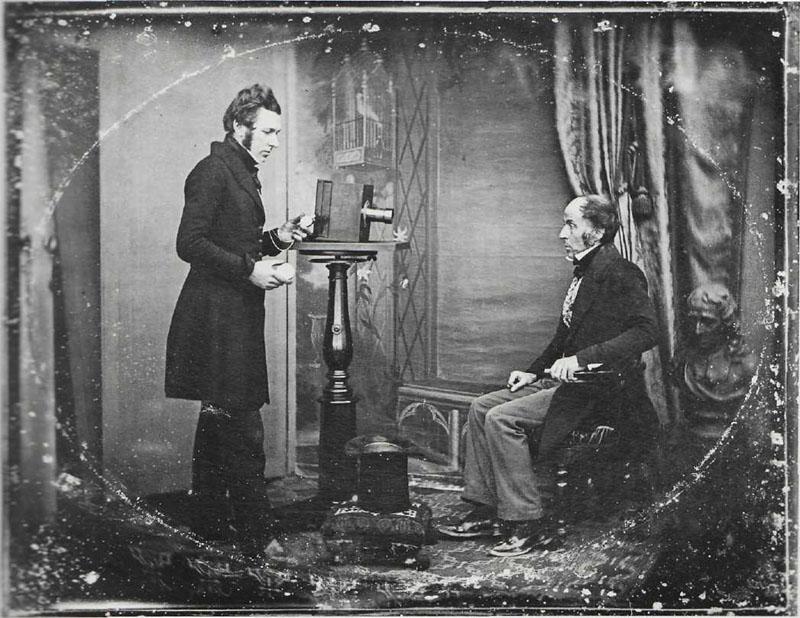
The Daguerreotypist could, and often did, run the entire process. He or she (there are several well-documented female practitioners) prepared the plate, sensitised it, judged the exposure, developed it over mercury, and fixed the image. The process involved the use of iodine, bromine, or chlorine compounds, as well as mercury vapour.
The most hazardous of these was mercury, which was heated repeatedly in poorly ventilated rooms. This produced various unpleasant neurological and behavioural symptoms including tremors and excess salivation. The Iodine and bromine fumes were also irritating and corrosive to the eyes and respiratory tract.
In larger establishments, some of the laborious polishing and finishing work was undertaken by specialist assistants or suppliers. Our plate maker or plate preparer/polisher prepared the base physical medium. Daguerreotype plates were made of silver-plated copper and required polishing to an exceptionally smooth, mirror-like surface.
In the larger studios that developed as part of the Daguerreotype ecosystem, sensitisers or chemical assistants could prepare the metal photographic plates in iodine and bromine boxes and handle the chemicals. This was particularly unpleasant work.
Development required that the exposed plate be held above heated mercury at 60–75°C. In a busy portrait studio this might happen repeatedly throughout the working day, so purpose-built mercury developing boxes were used by a Mercury developer/operator.
After Fizeau’s 1840 improvement, which strengthened the image by depositing a fine layer of gold on the developed plate, many daguerreotypes were “gilded” or “toned” with gold chloride. This introduced another specialist chemical operation, usually involving heating the plate, which a gilder could do.
Because a daguerreotype was monochrome, studios employed artists to apply extremely fine areas of pigment to cheeks, lips, jewellery and clothing. These colourists or miniature painters could also be exposed to occupational dangers as Nineteenth-century artists’ colours could contain lead, mercury, arsenic and other toxic metals.
The daguerreotype image was vulnerable to abrasion and tarnishing, so plates were normally sealed behind glass and mounted in cases or frames. This supported trades in making wooden cases, leather coverings, and decorative mounts, which required the skills of case makers, frame makers, and finishers.
What I found fascinating is that the daguerreotype created so many roles beyond that of photographer. It’s fair to say that it created a whole chemical manufacturing and service chain around photography, albeit briefly. The heyday of these daguerreotype jobs was from the early 1840s to the late 1850s, after which the cheaper and reproducible wet-collodion process rapidly replaced the daguerreotype. The plate preparers, mercury developers and daguerreotype colourists largely disappeared with the daguerreotype during the 1860s, although photographic colourists continued working with later processes.
Other trades would last much longer. Camera and lens makers, photographic chemists and suppliers, studio assistants, retouchers, framers and case makers adapted to successive technologies and, in altered forms, survived well into the twentieth century or survive to this day.